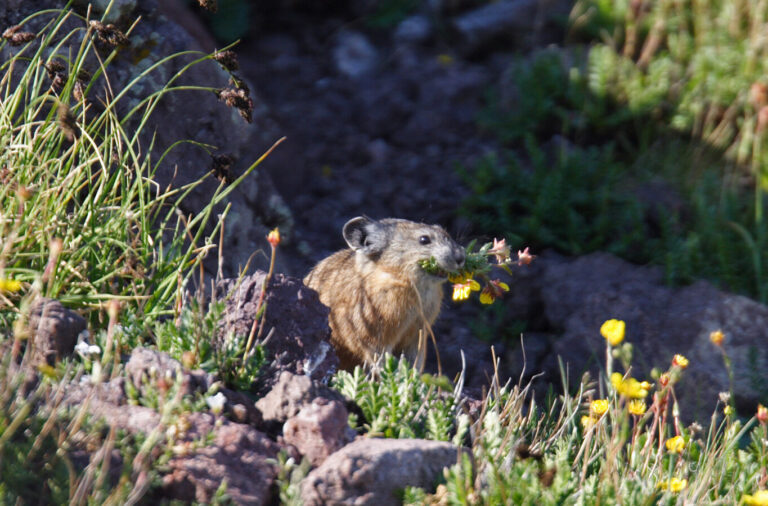
The American pika (Ochotona princeps) is a small relative of rabbits and hares that thrives in cool, mountainous habitats, such as slopes of talus (loose rock) and lava fields. Pikas rely on snow cover for insulation and moisture. Highly sensitive to temperature changes, pikas struggle when temperatures are too warm. To stay cool, pikas rely on crevices and cavities in rocks for cover and shade. The effects of climate change, especially higher temperatures and reduced snowpack, are expected to negatively affect pika populations and their habitats. As a result, the American pika is listed as a Species of Greatest Conservation Need in theUtah Wildlife Action Plan⭧.
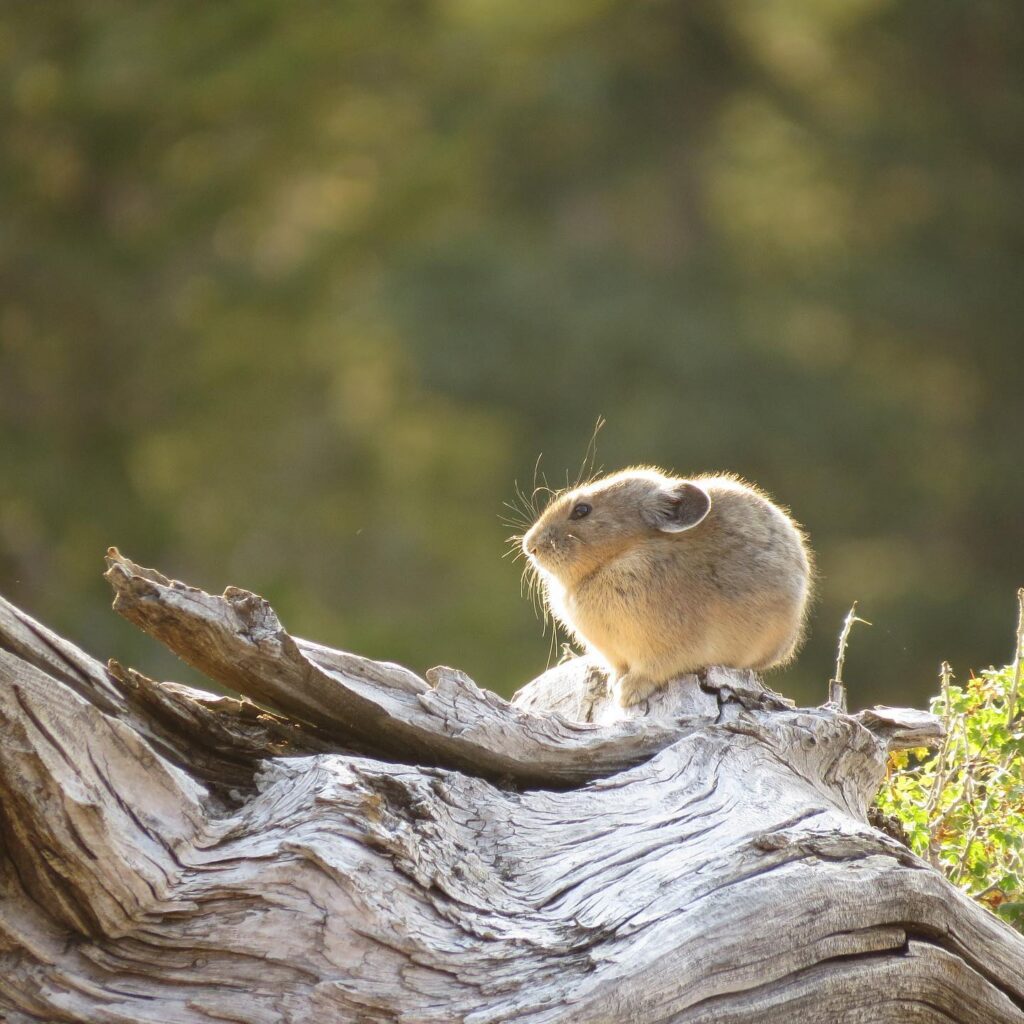
American Pika; Ochotona princeps -- Photo by Lynn Chamberlain, Utah Division of Wildlife Resources
Pika Monitoring
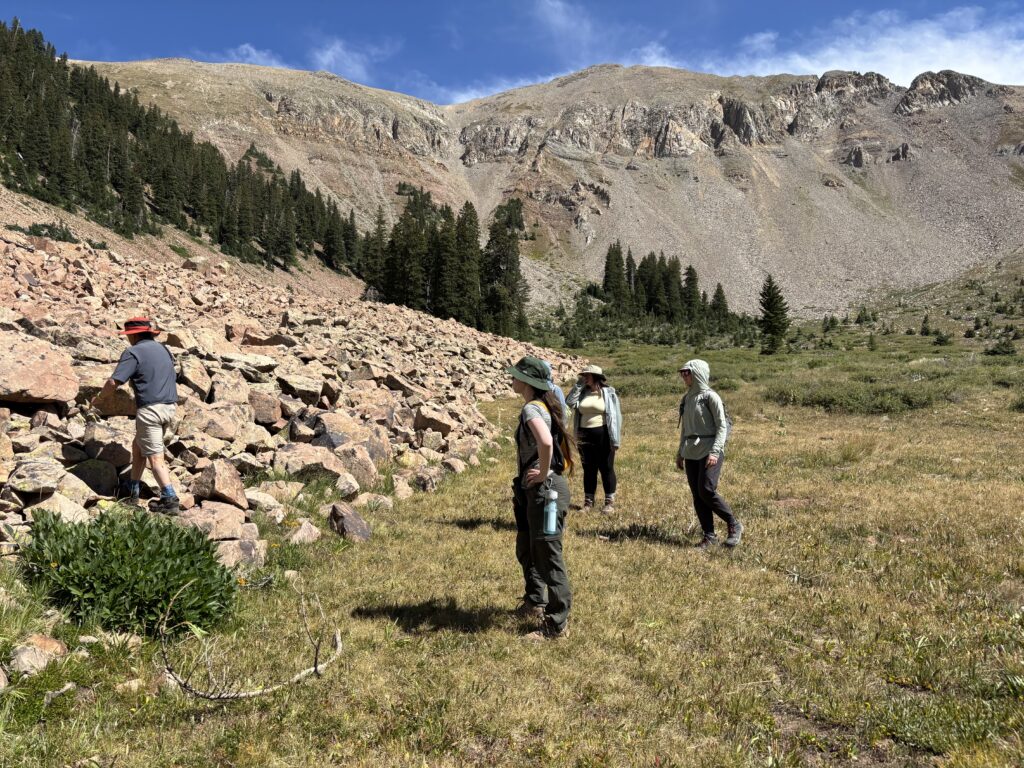
Pika Watch surveyors, photo by Johanna Varner
In 2026, Utah’s Hogle Zoo launched Utah Pika Watch, in partnership with the Utah Division of Wildlife Resources (DWR) and Colorado Mesa University. Modeled after Oregon Zoo’s Cascades Pika Watch program, Utah Pika Watch engages community scientists across the state to collect data on vulnerable pika populations. Because the Utah DWR conducts statewide pika monitoring every 6 years, surveys conducted by Utah Pika Watch volunteers help fill data gaps in the interim period. The yearly data collected through the Utah Pika Watch program can reveal notable short-term changes and inter-annual variation in pika populations.
From mid-June through August each year, trained community scientists visit designated survey sites in high-elevation habitats and conduct a 25-minute “sitting survey”. At each location, volunteers record signs of pika activity. The data can then help scientists track changes in and among pika populations over time, respond quickly to any potential declines, and prioritize appropriate management actions.
Join Utah Pika Watch
Many thanks to everyone who joined us for the 2026 Utah Pika Watch season! Your time and observations help us better understand and protect Utah’s American pika populations.
Although this season has come to an end, please join us next spring to learn about the 2027 opportunities to participate in pika monitoring. As trained community scientists, you can conduct independent surveys throughout the summer and contribute valuable data to this important conservation effort.
Survey Season: Mid-June through September
Commitment Level: Flexible and self-directed. Volunteers are encouraged to conduct at least one survey at one site during the field season, but are welcome to conduct multiple surveys
Communications: Periodic email updates throughout the survey season
Required Training: Each spring, Hogle Zoo hosts in-person training events. At these events, you will learn all about American pika, what the state is doing to monitor populations in Utah, and how to conduct pika surveys on your own throughout the survey season.
We expect to announce the training dates and locations in February 2027. Please check back then for more information.
For more information or questions about Utah Pika Watch, contact [email protected].
American Pika; Photo by Brian Maxfield, Utah Division of Wildlife Resources