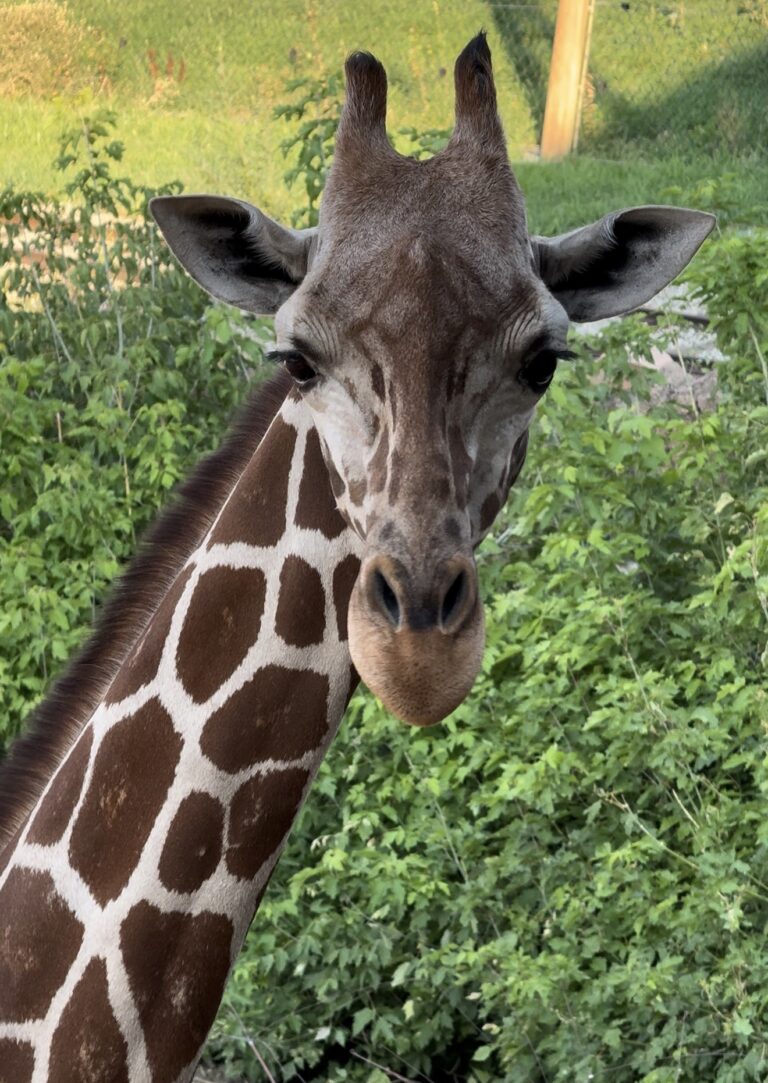
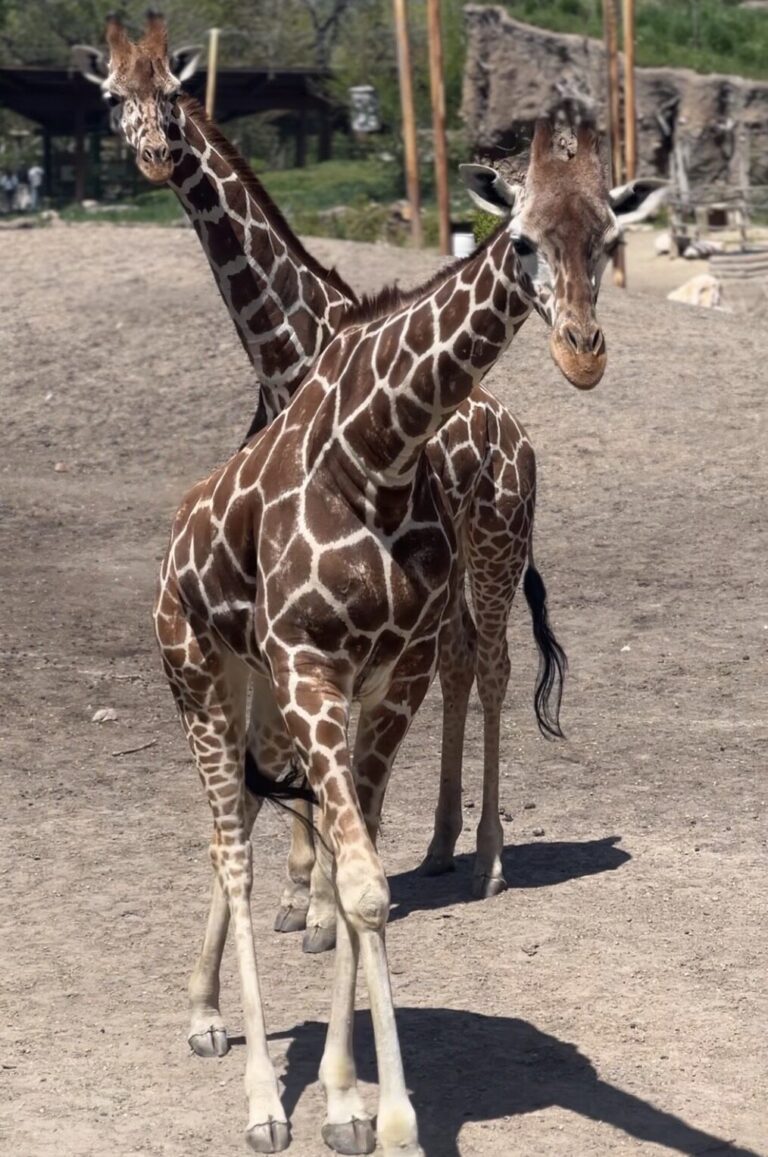
Big news from African Savanna! Utah’s Hogle Zoo is excited to announce giraffe Minka (8) is expecting her first calf in February. As she nears the end of her 15-month pregnancy, animal care and animal health teams are closely monitoring Minka, including through regular ultrasounds.
Minka came to Hogle Zoo in 2019 on a breeding recommendation from the Association of Zoos and Aquariums (AZA) Species Survival Plan (SSP). The calf’s father is Ja (5), who joined Hogle Zoo on a breeding recommendation in 2022. This will be Ja’s second calf, following the birth of Nguvu in February 2025 to mom Stephanie.
Mindful for Minka
Since this is Minka’s first pregnancy, animal care and animal health teams are taking a thoughtful, proactive approach as she nears her February birth window.
With any pregnancy or birth, there is a possibility that complications may occur or a calf may not survive. Every giraffe pregnancy is unique, and first-time mothers sometimes face a steeper learning curve, requiring additional support as they adjust to caring for a calf.
The zoo’s teams are prepared for a range of outcomes and have plans in place to provide the best possible care for both Minka and her calf. Every step centers on animal choice and wellbeing, with the animals’ best interests always at the forefront.
Animal care in action
Through daily husbandry and trusting relationships, Minka’s care team has observed some individual behavioral traits that make close monitoring especially important. Teams will observe Minka closely before, during, and after birth to understand how she responds and step in if additional support is needed. This includes barn preparations and additional overnight watches, ensuring her team is nearby and ready to respond.
Staying warm for winter
During the winter months, the giraffes spend most of their time in their indoor barn. They may choose to go outside on days when temperatures reach 50 degrees or warmer, but access to outdoor spaces is always based on their comfort and choice. Guests may not see the giraffe herd during their visit, especially on colder days.
These seasonal adjustments allow animal care teams to support Minka and the herd while prioritizing their wellbeing throughout the winter.
Stay tuned on Hogle Zoo’s Instagram and Facebook as Minka nears her February birth window!
Giraffe conservation
Minka’s pregnancy represents an important step in protecting giraffes, a vulnerable speciesfacing habitat loss, human population growth, and poaching. Found in Africa’s savannas, grasslands, and open woodlands, giraffes form loose, ever-shifting herds of 2 to 70 individuals. In 2016, their conservation status showed severe population declines, with about 117,000 remaining in their natural habitat. Hogle Zoo supports Save Giraffes Now, an organization dedicated to protecting giraffes by combating poaching and reducing human-giraffe conflict across Africa.
Animal wellbeing
Protecting animals in the wild starts with the wellbeing of the animals under our care. Providing exceptional care throughout every stage of pregnancy and birth is one of the many ways we work to achieve our vision of prioritizing animal wellbeing in everything we do.
The calf’s father is Ja (5), who joined Hogle Zoo on a breeding recommendation in 2022. This will be Ja’s second calf, following the birth of Nguvu in February 2025 to mom Stephanie.
With any pregnancy or birth, there is a possibility that complications may occur or a calf may not survive.
Every giraffe pregnancy is unique, and first-time mothers sometimes face a steeper learning curve, requiring additional support as they adjust to caring for a calf.Minka’s care team has observed some individual behavioral traits that make close monitoring especially important for this pregnancy. Teams will observe Minka closely before, during, and after birth to understand how she responds and step in if additional support is needed.
Giraffe calves usually stay with their mom for the first 15 to 18 months. During this time, they nurse, learn survival skills, and gradually become more independent. While they may start socializing with other giraffes in the herd early on, they still rely on their mom for protection and guidance. They become fully independent around 2-3 years old.