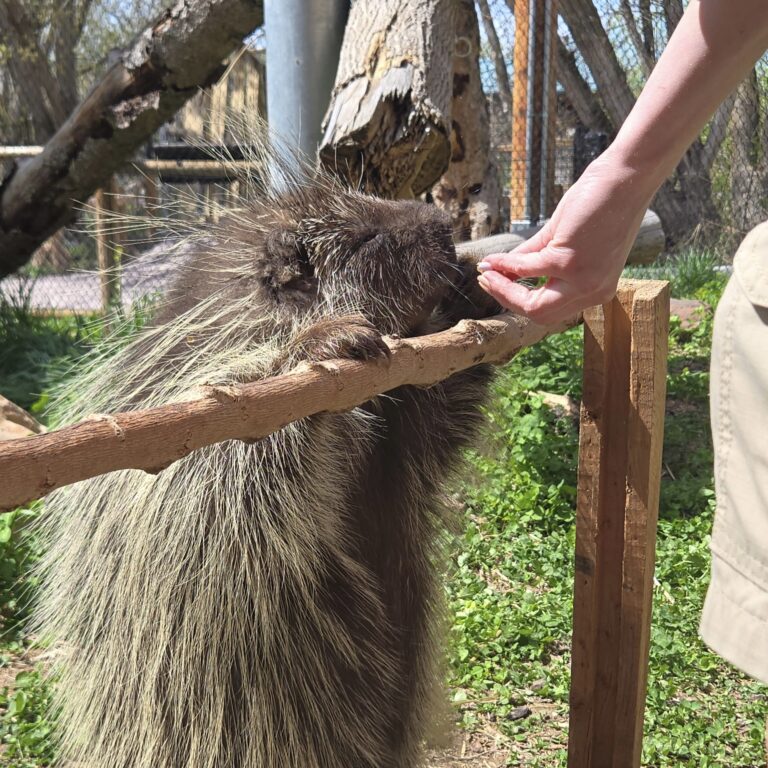
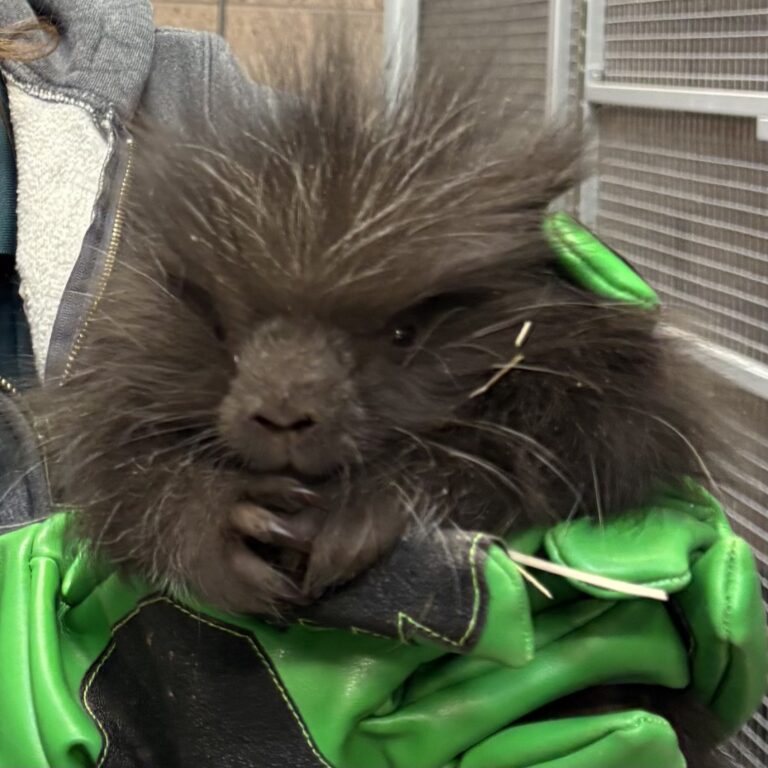
Utah’s Hogle Zoo is excited to announce the birth of Briar, a male baby North American porcupine, also known as a porcupette, to mom Blackberry and dad Barton on May 23, 2026. Named by donors Craig and Sue Jones, he weighed just under 2 pounds at birth.
During your next visit to Wild Utah, you may spot Briar inside a crate or close to Blackberry. In their natural habitats and under our care, porcupettes typically stay tucked away during the day while mom forages.
Depending on their needs, they may spend time in either their outdoor habitat or indoor space, and they will rotate habitat access with Barton every other day. Because of these rotations, seeing Briar and Blackberry may take a little luck, but we promise they’re worth the wait! Porcupines develop quickly, so Briar could be climbing around the habitat soon.
Briar will stay by mom’s side for at least the next eight months before heading to another facility to serve as an ambassador for the species. Blackberry and Barton are at Hogle Zoo on a breeding recommendation from the Association of Zoos and Aquariums (AZA) North American porcupine Species Survival Plan (SSP). This is the pair’s second porcupette together, the first being Blake, born in April 2025.
Animal ambassadors are specially trained and cared for. They help Hogle Zoo achieve our mission of creating champions for wildlife by connecting people and animals to inspire action. Through our Animal Ambassador team, we learn how every species, big or small, plays a role in its unique ecosystem and how small everyday actions can make a difference.
Did you know?
Porcupines are pregnant for roughly 7 months! Blackberry’s care team closely monitored her through wellbeing assessments and daily husbandry. About 6 weeks before she gave birth, we confirmed her pregnancy with an X-ray that was performed through voluntary training.
About North American porcupines
Found across a variety of habitats, including grasslands, desert shrub communities, and tundra environments, North American porcupines are known for their impressive coat of more than 30,000 sharp quills. Porcupines are expert climbers and often spend time in trees, using strong claws and specialized feet to navigate branches.
North American porcupines face challenges from habitat fragmentation, vehicle collisions, and human-wildlife conflict. Education and conservation efforts help ensure healthy, sustainable populations remain across their native range. Visit WildAwareUtah.org/wildlife/porcupines/ to learn more about porcupine awareness and safety information.
You can now visit Briar and Blackberry in Wild Utah.