Spotted in Asian Highlands: Meet Amur leopard cubs Emilio and Caspian
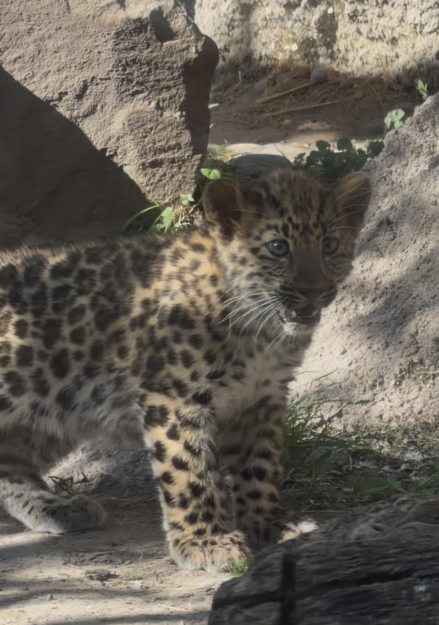
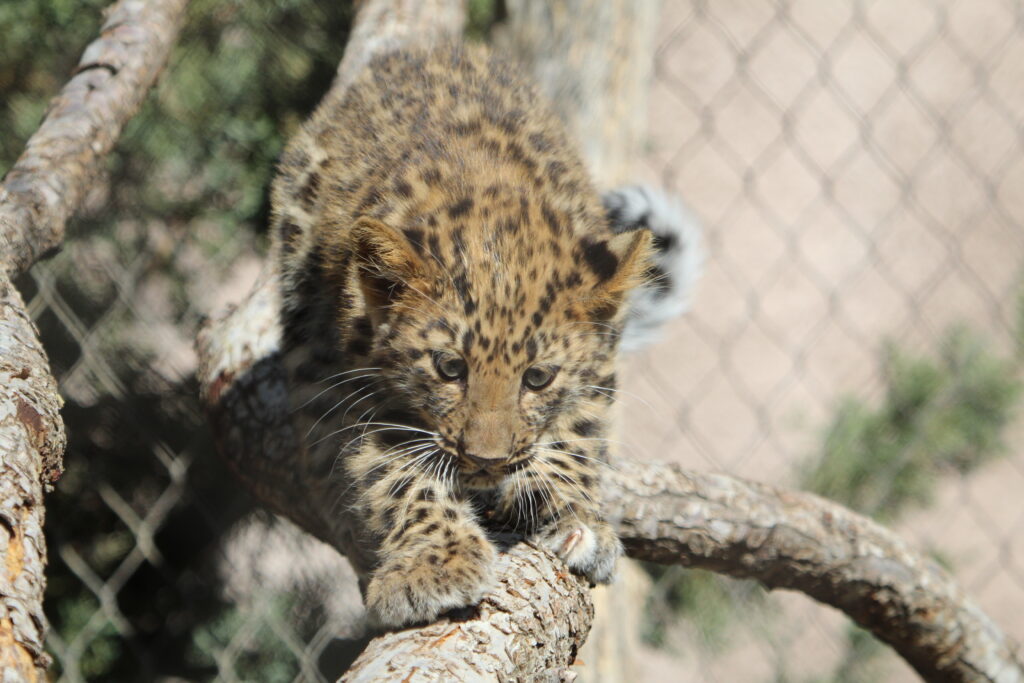
The critically endangered Amur leopard cubs, Caspian and Emilio, born February 18, have started exploring their outdoor habitat in Asian Highlands for the first time.
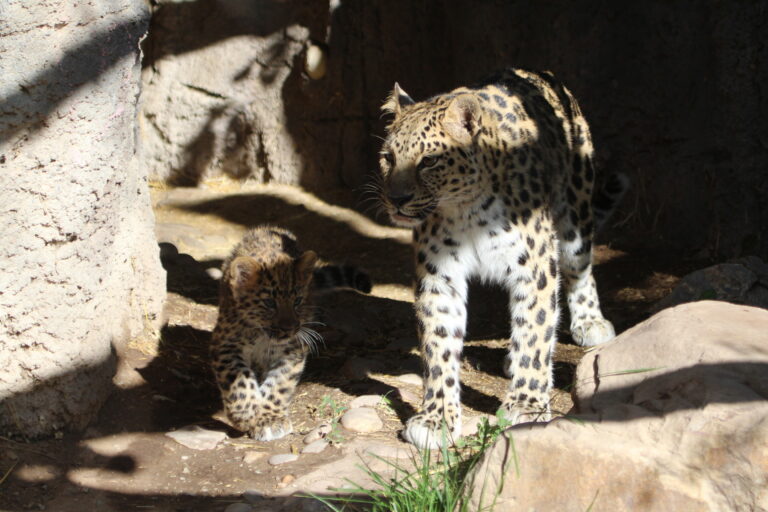
As they get acclimated to their new habitat, they will have access to indoor spaces. Guests may see the family moving between their outdoor habitat and indoor spaces throughout the day. As an experienced, attentive mom, Zeya is letting the brothers explore while still reigning them in when needed!
You can tell them apart by Caspian’s adorable white spot on his front paw, just like mom Zeya’s.
Behind the Scenes
The brothers have been bonding with Zeya behind the scenes since birth. Before heading outside, the cubs received several exams from Hogle Zoo’s animal health teams to assess overall health and administer three rounds of vaccinations.
During their time behind the scenes, animal care teams also started building training relationships with the cubs to help them learn to participate in their future care, including tracking a target, moving to different areas, voluntarily stepping onto a scale, and safely taking food from their care team.
“We were so excited to welcome Caspian and Emilio this February. It's been about four years since Zeya last had cubs, and we are happy everything has been so smooth for them and our pro mom, Zeya. Both boys take after their mom with a dash of spice in their personalities, but never giving spice without Zeya nearby to back them up. Caspian has been leading the way in exploring, while Emilio tends to stay in Zeya's shadow. Watching them grow and learn the ropes a little more each day has been such a rewarding experience.”
- Brittany Dowdell, Animal Care Supervisor - Asian Highlands
About Amur Leopards
These cubs represent an important milestone in protecting the critically endangered Amur leopard, found in the temperate forests of Russia and China. With as few as 130 mature individuals left in their natural habitat, Amur leopards are among the rarest cats in the world. These nocturnal, solitary cats face ongoing threats from habitat loss, prey scarcity, low genetic diversity, poaching, and illegal wildlife trade.
Though relatively small, Amur leopards can reach speeds of up to 35 miles per hour and are powerful, silent hunters capable of taking down prey three times their size. As top predators, they play a critical role in maintaining healthy forest ecosystems.
Guests can support the conservation of forest wildlife, like the Amur leopard, by choosing wood and paper products certified by the Forest Stewardship Council, which promotes sustainable practices and protects vital habitats worldwide.
You can now visit Emilio, Caspian, and Zeya in Asian Highlands.