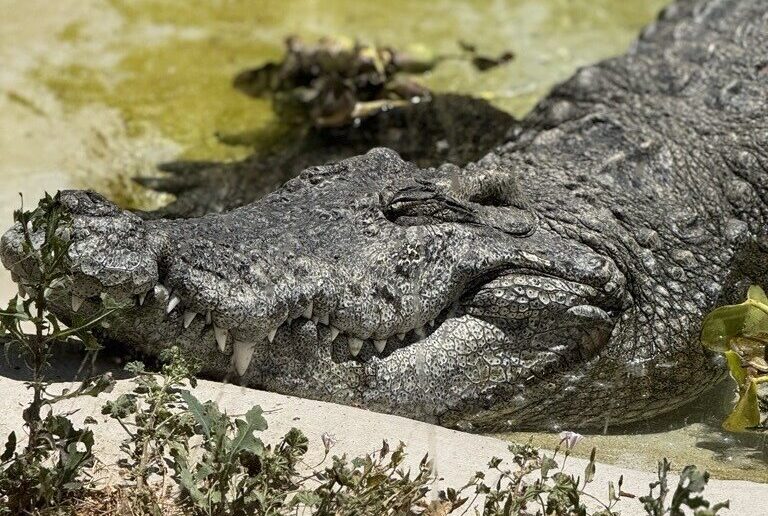
How Utah’s Hogle Zoo and University of Utah Health came together for a jaw-dropping undertaking
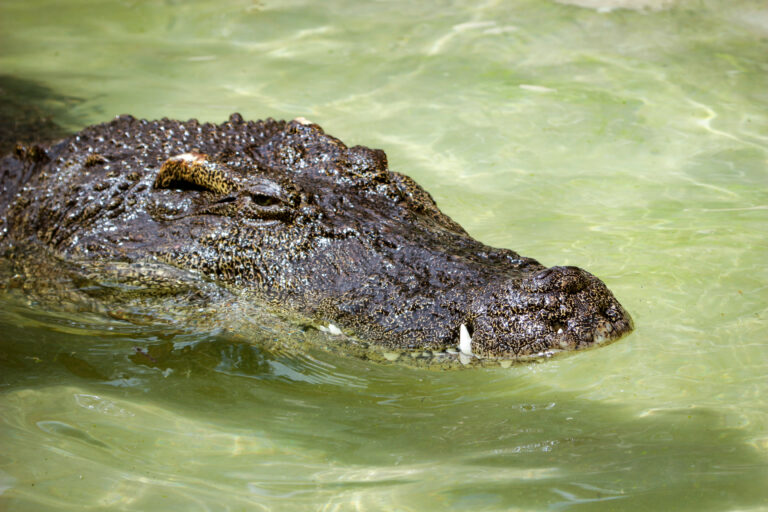
At nearly 400 pounds with a bite force exceeding 3,000 PSI, Siamese crocodile Bill is a formidable presence in the Small Animal Building at Utah’s Hogle Zoo. His care team describes the 61-year-oldreptile asa stubborn but lovable old crocodile.
“Even though he’s larger than his mate, Hillary, she’s usually the one in charge,” shares Meredith Salinas, Animal Care Supervisor – Herpetology. “Bill’s favorite food is chunks of red meat, and he loves getting massaged with running water.”
As Bill ages, his care continues to adapt to support his wellbeing. Last fall, changes in Bill’s health led to a highly coordinated effort that included safely transporting a crocodile of his scale to our health partners at University of Utah Health for advanced imaging.
Animal care in action
Animal care and veterinary teams began closely monitoring Bill after observing changes to his health in 2025, including a decreased appetite, weight loss, and abdominal bloating. Despite these symptoms, his bloodwork remained normal, leaving the underlying cause unclear.
The team began discussing pursuing advanced diagnostics, including a CT scan, which would require our team to execute a transport like none other. This extensive feat called for significant expertise, coordination across the zoo, and had inherent risks, particularly for an aging animal like Bill.
After careful consideration, Hogle Zoo decided to move forward with further diagnostics, and Bill’s care team developed a detailed plan, spending the following weeks practicing and preparing his transport.
“I am proud of how safely and smoothly everyone worked together, and how positive the team remained throughout the process. Teamwork really makes the dream work for crocodilian catchups,” adds Salinas.
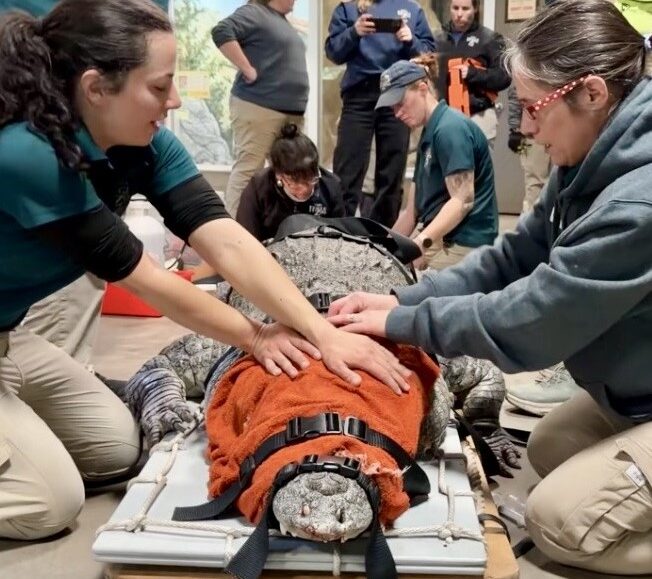
To transport Bill, our 20+ person team used specialized tools and techniques to safely restrain him, ensuring control of his head and body. From there, he was given a mild sedative under veterinary supervision to help him stay calm throughout the process.
Collaboration of care
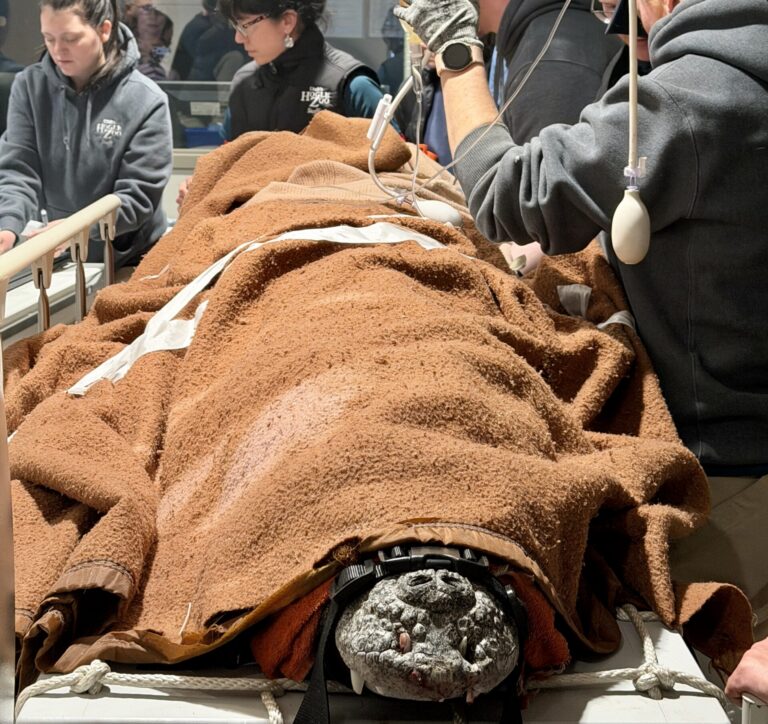
Bill was then placed on a secure, custom-made platform and carefully moved to the U of U Health radiology department for imaging. Throughout transport and the duration of the scan, veterinary staff monitored him closely to ensure his safety and wellbeing.
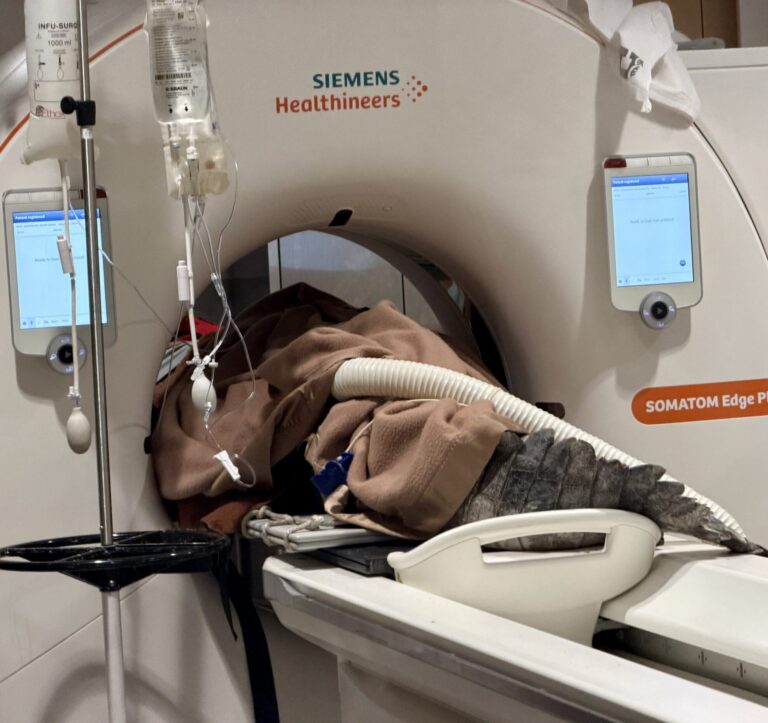
Hassan Bourija, radiology supervisor at U of U Health, and Scott Ehrgott, CT technologist at U of U Health, CT scanned the crocodile’s whole body to assess him, under the leadership of Edward Quigley, MD, PhD, professor of radiology at U of U Health.
“With crocodiles’ heavy armor (scales), routine veterinary diagnostics are difficult. We needed a CT unit that could handle his girth and weight, and fortunately, University of Utah Health was willing to take on this challenge with the zoo,” shares Dr. Erika Crook, DVM, Dipl. ACZM, Board Certified Specialist in Zoological Medicine™ and Director of Animal Health for Hogle Zoo.
The radiology team took on the unique challenge of scanning a ten-foot-long, reptilian patient in stride. “Our table is eight and a half feet long, even with the extension, and his tail was still sticking out a little bit,” Bourija explains. “We actually had to flip him around because the CT scanner table can only travel a certain distance. So we had to do the head, neck, and most of his chest and abdomen first, and then flip him around to do the rest of his body.”
The radiologists also custom fit the CT parameters to safely get a good picture of Bill’s body. “We programmed the radiation dose manually,” Ehrgott says. “For humans, the radiation dose is modulated automatically, but we don’t necessarily have that capability for someone who is much larger and has much thicker armored skin than a human being.”
The team was enthusiastic about helping find answers for Bill’s health. “These animals are worth it,” Bourija says. “If you can help them out and find out what’s wrong with them before they get sicker, why not?”
Ehrgott adds, “Honestly, Bill was a perfect patient.”
Bill of health
CT scan results revealed several stones in Bill’s stomach, which may be contributing to the symptoms observed by his care team. These stones, called gastroliths, are normal for crocodilians and are naturally swallowed, both in their natural habitat and in human care, to help with digestion. His bloodwork remained normal, and there is no evidence of cancer.
Following the scan, Bill was safely transported back to the zoo, where he could recover in a private, behind-the-scenes area. He gradually returned to his habitat, where he returned to his pool and rejoined habitat-mate Hillary.
Caring for Bill and Hillary over decades has built a deep understanding of who they are, from their behaviors to their individual needs. That relationship continues to guide how Bill is supported today.
Bill is doing well and continues to be closely monitored by animal care and veterinary teams. They have observed less bloating, improved appetite, and increased energy.
Given Bill’s age and current condition, the team is taking a thoughtful approach to next steps, weighing the pros and cons of a stone-removal procedure. Any potential procedures are being carefully evaluated, with decisions guided by Bill’s overall wellbeing and quality of life.
Bill and Hillary have been a familiar part of visits to Hogle Zoo for decades, connecting generations of guests to their species. Behind the scenes, that time reflects ongoing, dedicated care from the teams who look after them each day.